
 简体中文
简体中文Search for More Information


Technical Foundation Drives Industry Specialization: A 19-Year Chronicle of Jiayi RYK’s Development in Linear Motion Technology
Precision linear motion units serve as the core kinematic foundation for intelligent manufacturing equipment; their structural stability, consistency in positioning accuracy, and adaptability to diverse operating conditions directly determine the mass production reliability and technological ceiling of high-end automated production lines.
Over more than a decade of iterative localization, China's precision linear motion industry has gradually completed a transformative upgrade—shifting from a state of heavy reliance on imports to one of independent control and self-sufficiency.
Dongguan Jiayi Intelligent Equipment Co., Ltd. (RYK) has dedicated itself to this specialized field for 19 years, successfully evolving from a pioneer in addressing non-standard operating scenarios to a developer and manufacturer of standardized, systematized precision transmission components.
The company has established a comprehensive, localized technical ecosystem that integrates material science, structural design, precision machining, standardized quality control, and application-specific adaptability.
Drawing upon the broader trajectory of industry development and the company's own accumulated technical expertise, this article objectively analyzes the logical framework behind the formation of RYK’s technical system, its path of industrialization and iteration, and the value it contributes to empowering the industry.
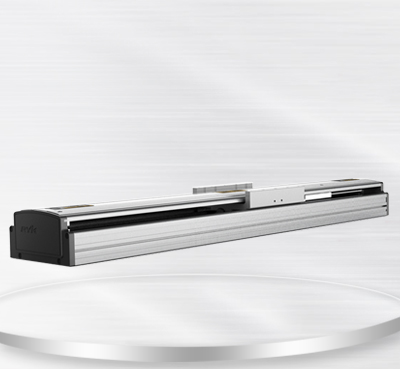
In the mid-2000s, as China's automation industry was just taking its first steps, core precision linear motion components remained largely monopolized by foreign brands. The domestic market suffered from significant shortcomings, including excessively long delivery lead times, poor adaptability for custom applications, and high overall operation and maintenance costs.
Concurrently, domestic manufacturers faced widespread technical challenges characterized by immature processing techniques, inconsistent precision, and a lack of empirical data regarding performance under various operating conditions.
RYK’s founding team entered this sector by initially focusing on providing support for non-standard automation scenarios, thereby accumulating a wealth of in-depth operational data under complex working conditions. Through this process, they identified and distilled common industry pain points—such as precision degradation caused by high-frequency start-stop cycles, structural deformation in harsh environments, and the cumbersome nature of maintaining conventional structures.
Based on these insights, the team established a core R&D strategy centered on "standardization, high stability, and low wear," thereby breaking free from the developmental limitations inherent in purely non-standard, one-off customization projects. This strategic shift positioned RYK as one of the earliest domestic technical teams to undertake the systematic research and development of localized linear motion modules.
Leveraging its extensive accumulation of operational data, the company has successfully completed three critical upgrades to its technical ecosystem, thereby gradually constructing formidable competitive barriers within the industry. Following the successful implementation of its brand strategy, RYK established a core product roadmap focused on lightweight alloy profile modules. By capitalizing on the inherent advantages of these materials and structural designs, the company effectively resolved the structural deficiencies associated with traditional steel-based modules—specifically their excessive weight, limited integration capabilities, and high mass-production costs—thereby aligning its offerings with the prevailing industry trend toward the integration and iterative upgrading of small-to-medium-scale automation equipment. During the phase of upgrading industrial demand in 2019, the company successfully expanded its product matrix, breaking through the limitations of traditional ball screw modules. It strategically established a comprehensive product ecosystem encompassing high-speed belt-driven modules, ultra-high-precision linear motor modules, and multi-axis linkage platforms.
By unifying the supply chain for core transmission components and standardizing assembly processes, the company enabled its products to extend beyond general automation applications into high-precision scenarios, such as laser processing and 3C electronics manufacturing.
By 2025, the company had achieved a fully closed-loop system across all dimensions—encompassing production capacity, hardware infrastructure, quality control, and R&D. Leveraging an 8,000-square-meter standardized production facility, precision CNC machining equipment, and a complete suite of precision inspection instruments,
and supported by a professional R&D team of over 20 specialists holding 36 authorized patents, the company established robust capabilities for standardized mass production and precision verification, thereby ensuring the stable, large-scale delivery of a diverse range of module products.
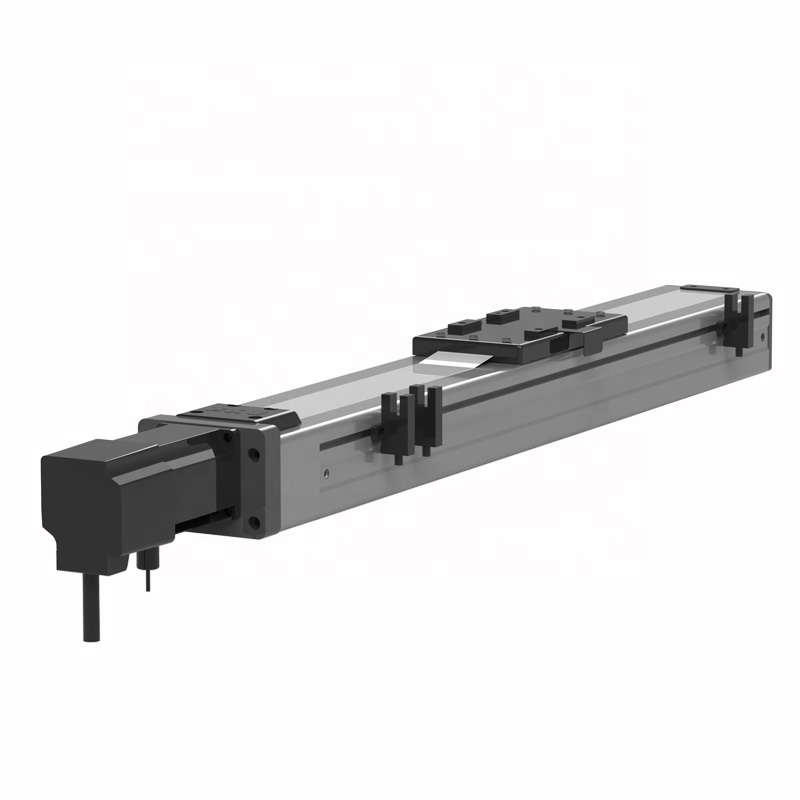
The operational adaptability and stability of RYK products stem from a systematic technical and process architecture grounded in six key dimensions. At the *material level*, the company employs age-hardened and stress-relieved aluminum-magnesium alloys to thoroughly release internal stresses within the profiles, thereby suppressing structural micro-deformation under long-term loads and fluctuating temperature environments.
At the *machining level*, a "single-pass, integral forming" process is utilized to eliminate cumulative errors associated with segmented splicing, ensuring that full-stroke linearity and parallelism remain within a tolerance of 0.02 mm.
At the *transmission level*, the company exclusively utilizes imported precision ball screws and guide rails to standardize parameters regarding transmission backlash, friction coefficients, and wear resistance. At the *structural level*, the design features an optimized integrated motor mount and an open-top slider configuration,which serves to minimize coaxiality errors in transmission and reduce equipment downtime required for maintenance. At the *R&D level*, the company relies on a collaborative mechanism integrating industry, academia, and research institutions to continuously iterate and refine structural solutions tailored to high-speed, high-precision, and harsh operating environments.
At the *quality control level*, a three-tier comprehensive inspection system—covering components, semi-finished products, and finished goods—has been established. This system leverages laser interferometers to perform full-range precision calibration, thereby guaranteeing parameter consistency across mass-produced batches.
After nineteen years of continuous iteration, RYK has cultivated a comprehensive product matrix encompassing ball screw, belt-driven, steel-belt, and linear motor modules, as well as multi-axis integrated platforms. These products are specifically tailored to meet the distinct requirements of diverse scenarios—ranging from precision positioning and high-speed, long-stroke applications to operations in dusty or harsh environments,and ultra-high-throughput precision processing. Consequently, RYK products are widely deployed in core workstations across six major high-end manufacturing sectors: lithium-ion batteries, photovoltaics, semiconductors, medical devices, and laser processing. From the perspective of industrial application logic, the core value lies in mitigating hidden production costs—such as line commissioning, scrap loss, and downtime for maintenance—through stable, long-term precision retention and low-failure operational characteristics. This capability effectively meets the industrial demands of continuous, 24-hour mass production.
Overall, RYK’s nineteen-year journey of development serves as a quintessential microcosm of the localization and iterative evolution of China’s precision linear motion industry. The company remains committed to a long-term strategy of deep technological cultivation, centering its efforts on the accumulation of operational data, continuous process optimization, and the systematic enhancement of organizational capabilities, thereby gradually narrowing the technological gap with international brands.
Moving forward, the company will continue to iterate upon its precision transmission technologies and customized solutions, refine the process standards for domestically produced precision transmission components, and consistently provide the foundational component technology support essential for the localization and upgrading of high-end intelligent manufacturing equipment.