
 简体中文
简体中文Search for More Information


Analysis of Selection Criteria for Linear Motion Units in Automated Equipment: A Study on the Operational Adaptability and Technical Advantages of RYK Linear Modules
The selection logic for core components in high-end automated equipment has undergone a comprehensive evolutionary upgrade. Sectors such as lithium batteries, photovoltaics, semiconductors, and precision medical devices have moved beyond rudimentary selection standards based solely on basic motion compatibility.
Instead, they have adopted a core evaluation framework centered on precision consistency, long-term operational stability, adaptability to complex operating conditions, delivery reliability, and controllable lifecycle maintenance and operations.
As the core execution units within automated equipment, linear modules—specifically their manufacturing processes, transmission mechanisms, and quality control systems—directly determine the equipment's mass production yield and operational stability.
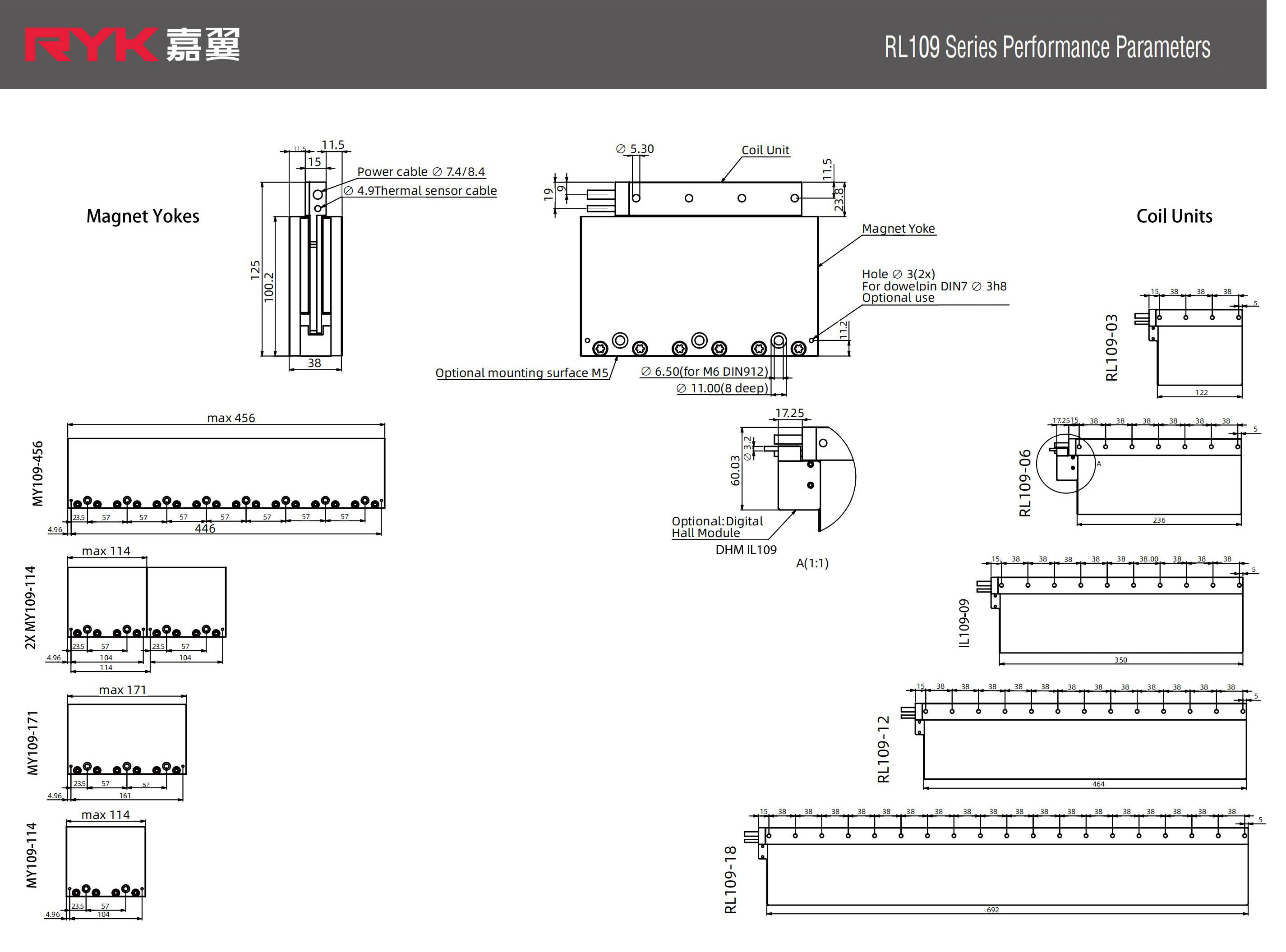
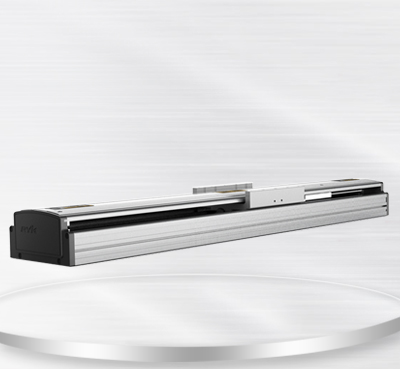
Based on the underlying logic of mass production environments in automation, this paper objectively analyzes the technical adaptability principles of RYK linear modules across four key dimensions: mass manufacturing systems, precision control mechanisms, localized supply chain systems, and adaptability to non-standard operating conditions.
This analysis provides a standardized technical basis for the selection of motion components in high-end automated equipment.
Robust adaptability to operating conditions is underpinned by a standardized mass manufacturing system and years of accumulated technical expertise. Drawing on over a decade of experience in precision transmission technology, RYK has established a fully closed-loop, autonomous production system encompassing R&D, precision machining, assembly and inspection, and operational commissioning.
The company operates a precision manufacturing facility spanning over 10,000 square meters, equipped with high-precision CNC machinery and specialized profile-forming equipment. This infrastructure enables autonomous and fully controllable processes for module structural machining, assembly, and precision calibration—thereby completely eliminating common industry issues associated with outsourced processing, such as dimensional deviations, inconsistent workmanship, and batch-to-batch instability.
Leveraging this standardized mass production and quality control system, RYK products have successfully passed rigorous supply chain qualification audits conducted by leading enterprises across multiple industries. They are fully capable of meeting the demands of continuous, 24/7 mass production environments,effectively resolving common technical defects found in traditional modules—such as long-term precision drift, structural deformation, and component-related abnormal noise.
Precision stability and batch-to-batch consistency constitute the core technical metrics for precision modules, as well as the primary technical challenges facing domestically produced modules. RYK has established a four-dimensional precision assurance system encompassing materials, components, manufacturing processes, and inspection protocols.
For core transmission components, the company exclusively utilizes imported precision ball screws, linear guides, and preloaded, backlash-eliminating structures—thereby standardizing critical parameters, such as friction coefficients and transmission clearances, directly at the raw material and component source. At the structural processing stage, we employ a "single-cut, one-piece forming" process. This eliminates errors associated with segmented splicing and tool-change transitions, while strictly controlling linearity and parallelism errors across the entire travel range, thereby resolving issues of localized precision deviation in long-stroke motion zones.
For the finished products, we utilize laser interferometers and 2D precision inspection equipment to conduct multi-point, multi-pass, and full-domain precision verification. By adopting "limit error" as the final factory acceptance criterion, we ensure controllable and consistent precision across mass-produced batches.
Empirical test data demonstrates that key performance indicators—such as repetitive positioning accuracy, full-stroke accuracy, and transmission backlash—are benchmarked against international top-tier brands, fully meeting the demands of mid-to-high-end precision automation applications.
Our localized supply chain and operations & maintenance (O&M) system effectively resolve the time-sensitivity bottlenecks typically associated with the mass production of high-end equipment. Imported modules often suffer from structural disadvantages—such as long lead times, delayed after-sales response, and high commissioning costs—which render them ill-suited to the rapid iteration cycles and urgent mass-production replenishment demands characteristic of the domestic market. Leveraging a localized, flexible manufacturing and inventory management system, RYK differentiates between standard and non-standard components to facilitate tiered delivery, thereby drastically shortening production cycles.
Concurrently, we have established a 24/7 technical response mechanism. Capitalizing on our strategic location within the Greater Bay Area, we facilitate rapid remote diagnostics and proximate on-site commissioning. This approach minimizes equipment downtime and mitigates production losses during mass-manufacturing operations, creating a distinct advantage in terms of responsiveness and O&M efficiency—one that imported brands are unable to replicate. While benchmarking our performance against imported products, we leverage our independent manufacturing infrastructure to optimize supply chain costs, thereby achieving prudent and effective cost control for our complete equipment unis.
For the specific and specialized operating conditions found within niche segments of high-end automation, standard modular components often exhibit significant limitations in terms of adaptability. Drawing upon a vast repository of real-world application data, RYK has developed comprehensive customization capabilities spanning environmental adaptation, structural modification, precision enhancement, and multi-axis architecture design.
We address diverse operating environments—including those involving dust, corrosive substances, cleanroom requirements, ultra-long travel distances, and specialized mounting interfaces—through targeted process modifications. These include optimizing sealing structures, upgrading to corrosion-resistant materials, integrating negative-pressure dust extraction systems, and employing integrated machining techniques for long-stroke components.
These capabilities allow us to precisely match the requirements of specialized scenarios, such as semiconductor cleanrooms, sterile medical environments, precision laser processing, and large-format sheet material handling. Furthermore, our service framework—which incorporates pre-deployment condition assessments, comprehensive 3D CAD support, and dedicated one-on-one technical consultation—helps preempt commissioning failures caused by component selection mismatches, thereby fulfilling the R&D and mass-production requirements of niche precision equipment and custom-built production lines. In summary, the core principle in selecting high-end linear motion units lies in ensuring a definitive match with specific operating conditions. The technical value of RYK modules is manifested across four key dimensions: a controllable mass-production system, stable precision parameters, efficient supply chain delivery, and comprehensive adaptability to specialized operating environments.
This enables them to fully address high-end automation requirements across a wide range of sectors, thereby providing reliable technical support for the localization and process upgrading of motion systems within domestic automation equipment.